
Raquel Lines Wellness
PT, PYT, ILM,FMS, FRCms
Health & wellness services


Some mountains challenge the body.
Others remind us why we keep it strong.
Movement
Resilience
Library
On-demand mobility, strength, and recovery programs for work, life, and longevity. Build the movement capacity to feel better, stay active, and keep doing what you love.
The Movement Resilience Library combines physical therapy inspired strategies, yoga therapy, and lifestyle medicine to help you move better, feel stronger, and stay capable of doing what you love.
Developed by a Physical Therapist with almost 30 years of clinical experience, this growing library helps you build the strength, mobility, balance, and resilience your body needs for everyday life.
Inside you'll find guided programs and therapeutic movement sessions designed to help you:
• Move with greater confidence and less pain
• Improve mobility, strength, balance, and recovery
• Build the physical capacity to support work, hobbies, travel, and healthy aging
Whether you're managing everyday aches and stiffness, building back your strength, or simply want to keep hiking, lifting, traveling, and living an active life, these evidence-informed programs meet you where you are and help you progress from there.
Train for the life you want to keep living.
Movement That Meets You Where You Are
Build mobility, strength, balance, and recovery with guided movement designed by a Physical Therapist.
Whether you have 10 minutes between meetings, need a recovery session after a long day,
want to improve your mobility, or are ready to build more strength,
the library gives you practical ways to keep your body moving.
Choose the classes that support what your body needs today
while continuing to build the capacity for what you want to do tomorrow.
Move better. Recover well. Stay capable.
Classes we Offer
Movement. Strength. Mobility. Recovery.
Every class is designed through the lens of nearly three decades of clinical experience as a Physical Therapist, with additional training in yoga therapy, lifestyle medicine, movement assessment, strength, mobility, breathing, and nervous system regulation.
Our approach draws from:
• Physical Therapy & Movement Science
• Functional Movement Systems
• Medical Therapeutic Yoga
• Integrative Lifestyle Medicine
• Functional Range Conditioning
• Postural Restoration
• Low Pressure Fitness
• Pelvic Health & Women's Health
Rather than relying on one type of exercise or one philosophy, I use different tools for different needs.
The goal is to build a body that can adapt to the demands of your life.


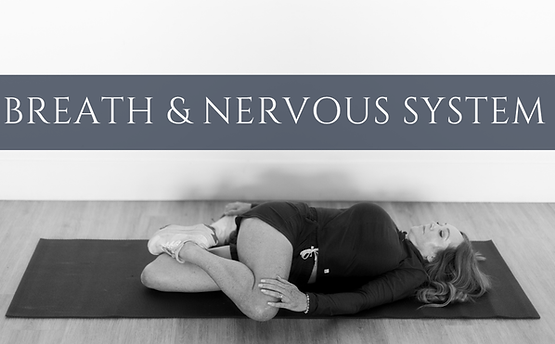
The experience that changed how I thought about Recovery.
In 2001, while pregnant with my third child and helping manage my mother's recovery from a stroke, I walked into my first yoga class exhausted and overwhelmed.
I was already a Physical Therapist. I understood movement, exercise, biomechanics, and rehabilitation.
But that class introduced me to something I hadn't been paying enough attention to:
Recovery.
For the first time in months, my breathing slowed. My shoulders relaxed. My mind quieted.
I had spent years learning how to challenge the body. Yoga helped me understand the importance of also creating conditions that allow the body to recover.
That experience changed the way I practiced Physical Therapy.
Over the next two decades, I continued studying movement science, therapeutic yoga, breathing, nervous system regulation, strength, mobility, and lifestyle medicine.
Today, I draw from all of those disciplines depending on the person in front of me, what they need, and what they want to keep doing.
Love, Raquel

My Movement Journey
Movement has been part of my life for as long as I can remember. My mom was a physical education teacher and master gardener, so being active and taking care of ourselves was simply part of how we lived. I danced competitively growing up, taught aerobics through college, studied Exercise Science, and eventually became a Physical Therapist. For most of my life, movement has been both something I love personally and something I've spent my career helping other people restore.
But my understanding of what it means to be healthy has changed quite a bit over the years.
In my younger years, I approached fitness the way a lot of ambitious people do. I ran, lifted weights, taught classes, and pushed myself through hard workouts. I knew how to challenge my body, but I wasn't nearly as good at recognizing when it needed recovery. When I discovered yoga in 2001 during an especially stressful season of my life, it introduced me to a completely different side of movement. For the first time, I began to understand how breathing, recovery, stress, and the nervous system influence the way we move and feel.
That experience didn't make me stop strength training or replace Physical Therapy with yoga. It expanded the way I thought about the body.
Over the next two decades, I continued studying movement science, therapeutic yoga, mobility, strength, breathing, nervous system regulation, and integrative lifestyle medicine. At the same time, I was raising a family, building a career, hiking mountains, navigating injuries of my own, and watching thousands of patients move through different seasons of their lives.
All of those experiences have shaped the way I practice today.
After nearly three decades as a Physical Therapist, I've realized that most people aren't trying to become elite athletes or accomplish some extraordinary physical feat. They simply want their bodies to keep allowing them to do the things they love.
They want to travel without worrying whether they can keep up. Hike with friends. Play pickleball. Work without being distracted by pain. Get down on the floor and back up again. Carry their own luggage. Play with their grandchildren. Keep saying yes to experiences as they get older.
And that's ultimately what changed the way I think about exercise.
Strength matters, but so do mobility, balance, endurance, recovery, and the lifestyle habits that help our bodies adapt to everything we're asking of them. We don't need to train perfectly, and we don't need to optimize every part of our lives. We need to build enough capacity to meet the demands of the lives we actually want to live.
That's what movement means to me now, and it's the philosophy behind the Movement Resilience Library.
The MYP Method™
The MYP Method™ is my framework for sustainable performance built around three interconnected areas:
movement
Build mobility, strength, balance, coordination, and confidence in the way your body moves.
Your energy
Support the systems that influence how you feel, recover, and adapt—including breathing, stress regulation, sleep, nutrition, recovery, and lifestyle.
Performance
Build the capacity for what matters most: work, recreation, relationships, travel, and everyday life.

YOUR PATH TO MOVEMENT RESILIENCE
You don't need to do everything at once.
Start with what your body needs now and build from there.
01
DISCOVER
Clarify what matters most.
Identify what you want to keep doing, where you currently feel limited, and what may be getting in the way of the life you want to live.
03
ADDRESS
Build what you need.
Use targeted movement, strength, recovery, and lifestyle strategies to improve capacity and prepare your body for the demands that matter to you.
02
ASSESS
Understand where you are now.
Look at your current movement, strength, mobility, recovery, and lifestyle habits to better understand what your body needs.
04
SUSTAIN
Keep it working for life.
Turn what you’ve learned into realistic habits that support your health, resilience, and ability to keep doing what you love over time.
Build for the life ahead.
Our bodies change. Our lives change. And what we ask of ourselves changes too.
Sustainable performance isn’t about doing everything perfectly. It’s about continuing to build the strength, resilience, and energy to meet the demands of your life while staying capable of doing the things that make that life meaningful.
Train for the life you want to keep living.
Education & Training Behind the Movement
The Movement Resilience Library draws from three decades of clinical Physical Therapy experience along with advanced education across movement science, mobility, therapeutic yoga, lifestyle medicine, breathing, core and pelvic health.
Each discipline adds a different tool to the larger goal: helping you build a body that moves well, adapts to changing demands, and stays capable for the activities that matter to you.
Exercise Science
B.S., Arizona State University 1993
The foundation for understanding how the body responds and adapts to physical activity, including anatomy, physiology, biomechanics, exercise physiology, and principles of exercise programming.
Physical Therapy
MPT, Baylor University 1997
Graduate-level education in movement assessment, rehabilitation, biomechanics, therapeutic exercise, and the evaluation and treatment of musculoskeletal and neurological conditions. Physical Therapy remains the clinical foundation of my approach to movement.
Integrative Lifestyle Medicine
Living Well Institute
Evidence-informed training in the lifestyle factors that influence health, recovery, and performance, including physical activity, nutrition, sleep, stress management, behavior change, and mind-body practices.
Professional Yoga Therapy
Living Well Institute
Advanced training in adapting yoga-based movement, breathing, mindfulness, and relaxation practices for individual health needs. Yoga therapy adds another tool for mobility, balance, body awareness, breathing, and recovery within my broader movement approach.
Functional Movement Systems
A movement assessment approach used to identify limitations, asymmetries, and movement patterns that may influence how efficiently the body moves. These principles inform how I assess foundational movement, identify areas that may need greater mobility, stability, or control, and guide appropriate exercise progression.
Functional Range Conditioning
A mobility-training system focused on developing usable range of motion and strength at the joints, rather than flexibility alone. These principles inform how I approach joint mobility, controlled movement, and preparing the body for the ranges required in everyday life and recreation.
Low Pressure Fitness
A breathing and postural training approach that incorporates diaphragmatic and rib-cage mechanics, postural positioning, myofascial concepts, and hypopressive techniques. I use principles from this training as one of several tools for core, breathing, posture, and pelvic health programming.
Postural restoration Institute
Advanced education in respiration, diaphragm and rib cage mechanics, and their relationship to posture and movement. These principles deepen my approach to breathing mechanics and trunk function, while the more individualized PRI assessment and exercise strategies are best suited to a personalized therapy setting.